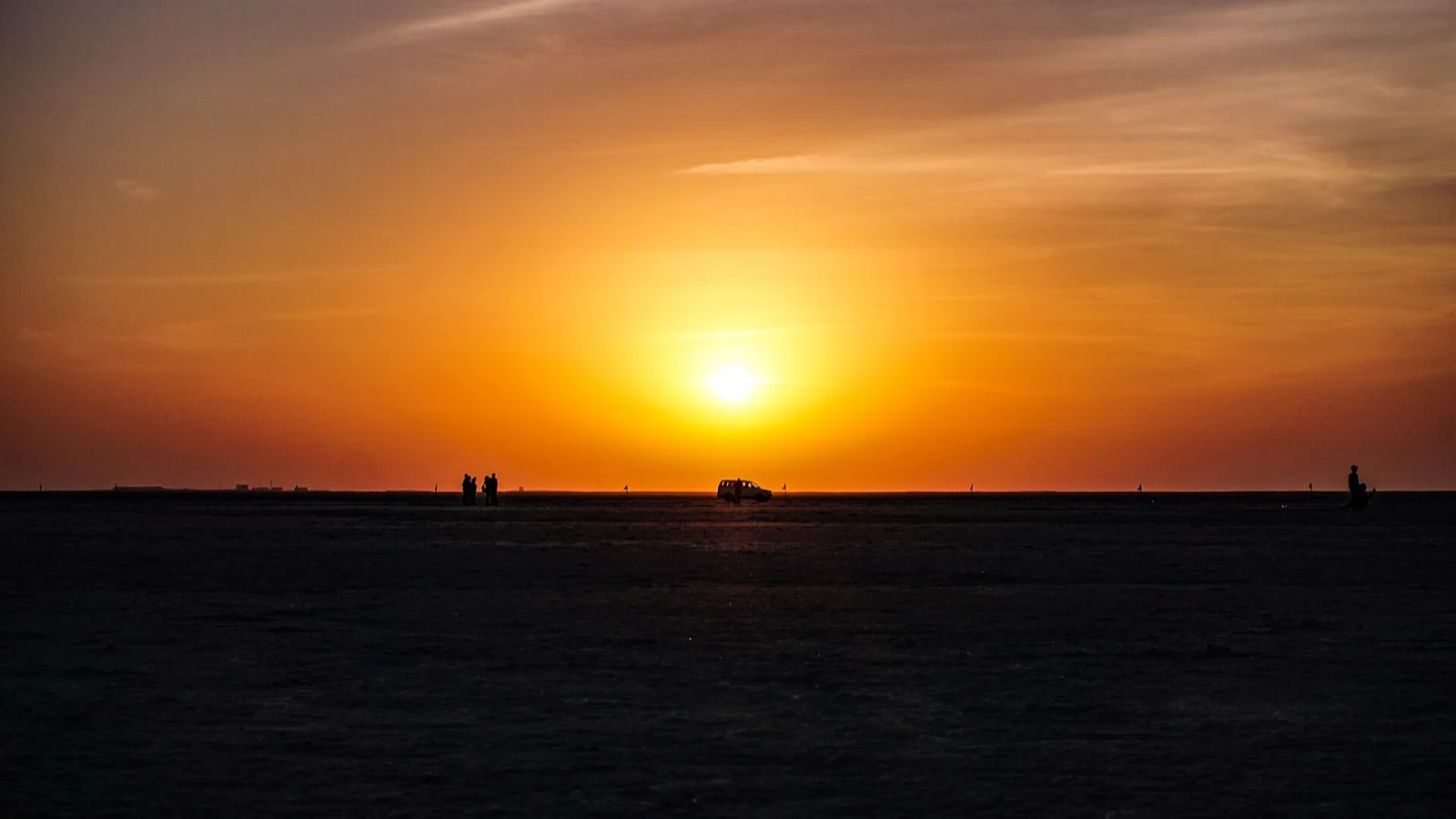
Rann of Kutch

Desert/a journey we curate for you

Rann of Kutch

where a sea became silence

setting

Desert

where

Kutch District, Gujarat, India

best season

October to March

ideal for

Silence & Stillness Retreats

( the feeling of it )

A sea withdrew and left its salt behind, white past the curve of the earth. You walk out onto the silence, and the silence holds.

( the story )

A vanished sea turned to white salt, where you walk out under the full moon and the silence holds.
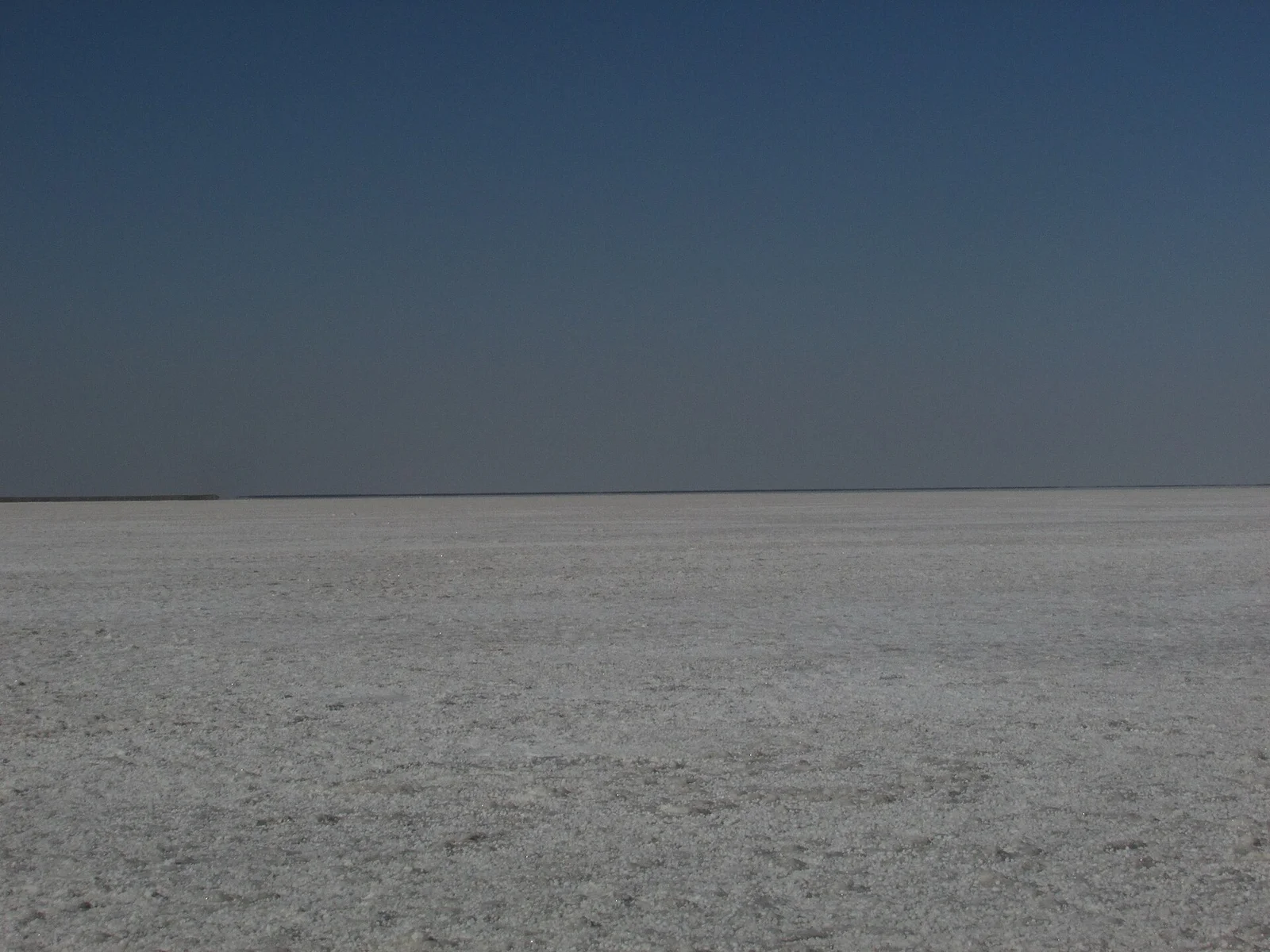
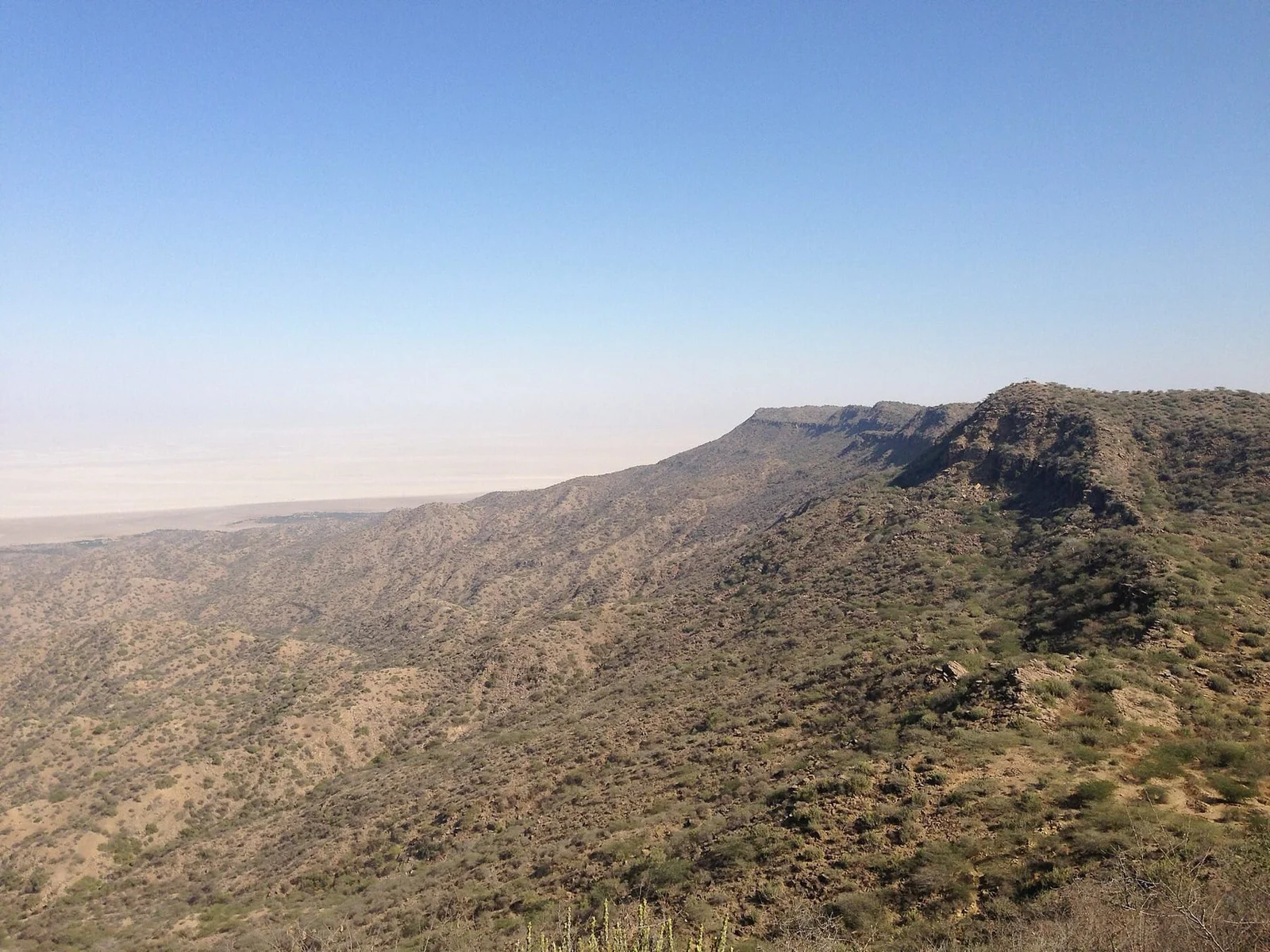
The Great Rann of Kutch is the bed of a sea the monsoon still remembers — roughly 7,500 square kilometres of salt that floods each summer and dries, by October, into a white crust that runs flat to the curve of the earth. Dhordo, the gateway village, sits about 85 kilometres north of Bhuj across the Banni grasslands; Kala Dungar, the Black Hill, rises 462 metres above it all, the highest point in Kutch, where a Dattatreya temple feeds wild jackals after evening aarti. South and east lies the Little Rann, whose Wild Ass Sanctuary — 4,954 square kilometres of saline flats and grass islands — shelters the world's last wild population of the khur, alongside flamingos wintering in the shallows. Between desert and desert runs a belt of villages that have made slowness a discipline for centuries: Nirona, where one family still paints with castor-oil rogan and the Luhars beat copper bells into perfect pitch by hand, and Bhujodi, where Vankar weavers count thread the way others count breath. On full-moon nights the salt turns silver, and walking out onto it is the closest thing the subcontinent offers to meditating on the open sky.

Salt to the horizon, an hour past Dhordo
Salt to the horizon, an hour past DhordoRanjith Kumar Inbasekaran · Wikimedia (CC BY-SA 4.0)
You don’t simply book a room in Rann of Kutch. You tell us what you’re seeking — stillness, ceremony, the mountains, the table — and we curate the days around you.

( field notes, dawn to night )

A day here

Dawn

The salt holds the night's cold. You sit on it, wrapped against the wind, and breathe while the light arrives — grey, then rose, then a white so complete it asks nothing of you. The horizon does the rest.

Day

Into the craft villages. In Nirona, a Khatri painter draws a thread of castor-oil rogan through the air and lays it down on cloth, half the design folded into being. In Bhujodi, the looms keep time like slow breath. You watch hands that have never hurried.

Dusk

Up the Black Hill, Kala Dungar, the highest ground in Kutch. After the temple's evening aarti the priests set out food and the jackals come, as they have for generations. Below, the Rann turns rose, then grey, then nothing.

Night

The full moon rises and the salt answers it. You walk out onto the white in silence, one slow step after another, until the lights of the camp dissolve behind you. The desert glows. You stop. You stay.

( what stays with you )

The experience

Walking Out Into the White

Walking Out Into the White

On full-moon nights the salt crust turns silver and the horizon disappears entirely. A guide walks you out beyond the lights of Dhordo, then falls back; the practice is simply to keep walking, slowly, breath matched to step, in a silence with no edges. It is the Rann's essential ceremony — meditation with the land as the instructor.

Ranjith Kumar Inbasekaran · Wikimedia (CC BY-SA 4.0)

Dawn in the Little Rann

Dawn in the Little Rann

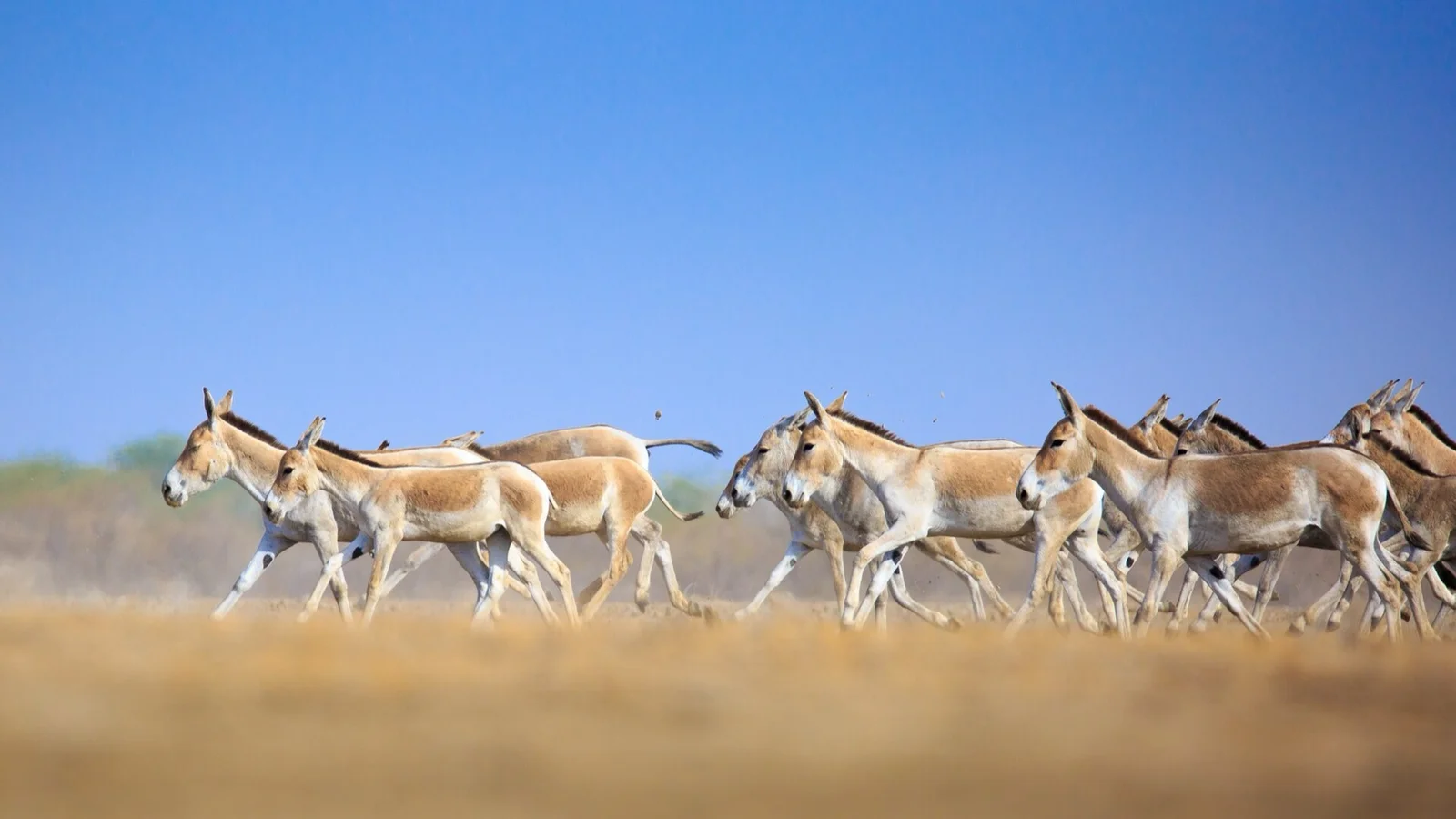
The Wild Ass Sanctuary is the last place on earth the khur runs wild — herds of them, pale gold, crossing the saline flats at first light while flamingos stand in the shallows. The drives here are slow by design: long stops, engines off, the desert's small sounds returning one by one. Wildlife as stillness practice, not pursuit.

Sumeet Moghe · Wikimedia (CC BY-SA 4.0)
An Afternoon with the Last Rogan Painters

An Afternoon with the Last Rogan Painters

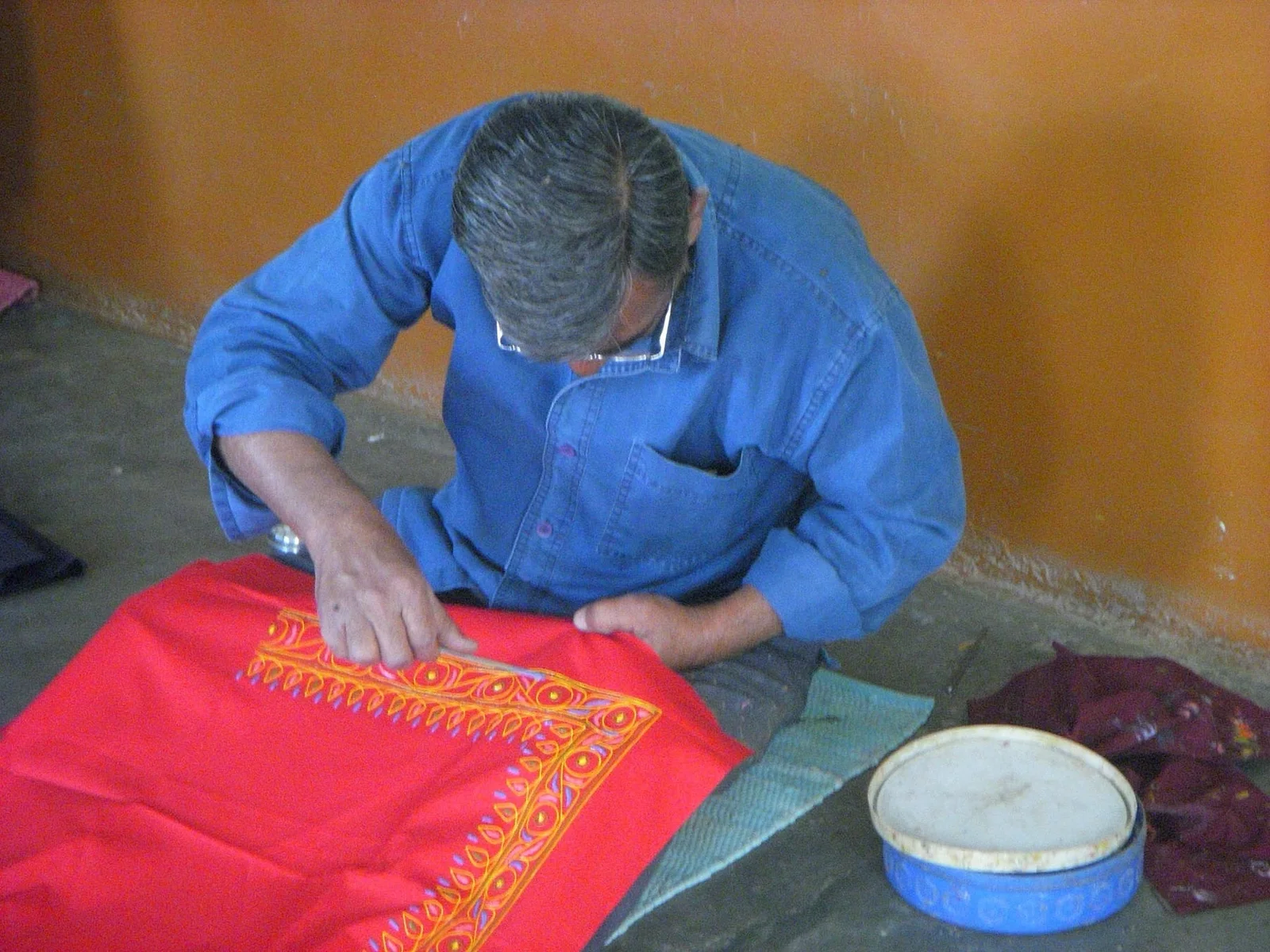
In Nirona, the Khatri family has painted with rogan — castor oil boiled for days, mixed with stone pigment, drawn out in threads finer than the cloth beneath — for generations, and they are the only ones left who do. You sit on the floor of their workshop and watch a design appear one breath at a time. It is the most persuasive argument for slowness you will ever see.

Rick Bradley · Wikimedia (CC BY 2.0)

Dusk at the Black Hill

Dusk at the Black Hill

Kala Dungar is the highest point in Kutch, and from its rim the Rann lies below like weather. At the centuries-old Dattatreya temple, evening aarti ends with the priests carrying food out for the wild jackals — an act of ceremony repeated daily for generations. You watch the white go rose, then grey, and understand why people climb hills to pray.

Sudha Kulkarni · Wikimedia (CC BY-SA 4.0)
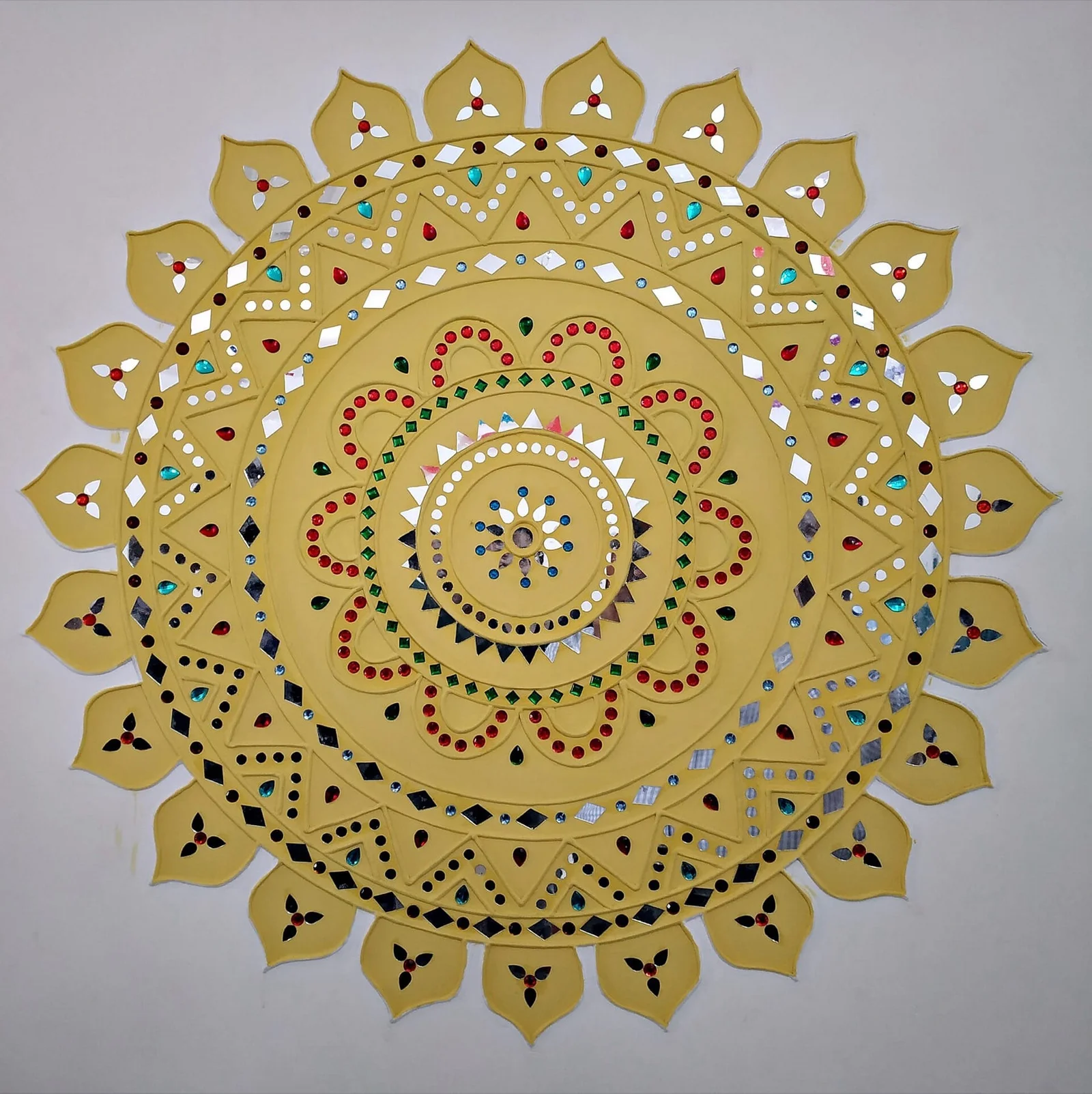
Nights in a Bhunga

Nights in a Bhunga

In the Banni villages around Hodka, you sleep in a bhunga — the round mud house of Kutch, earthquake-wise, cool by day and warm by night, its inner walls worked in lippan kaam, mud and mirror laid by hand. The mirrors catch lamplight the way the Rann catches the moon. Rest here is architectural.

b sarangi · Wikimedia (CC0)

Experiences we can arrange

Meditation & Breathwork
Full-Moon Salt Walks
Craft Village Immersions
Slow Wildlife Drives
Yoga on the Rann
Silence Practice

( let us curate your retreat )

The Rann does not entertain you. There is no trail to finish, no summit to take — only a flatness that slowly recalibrates the eye, and a quiet that recalibrates the rest. After a few days the mind stops reaching for the next thing; it learns the artisan's pace, the heron's patience, the moon's schedule. You came to see a white desert. You leave having practised, without trying, the oldest discipline there is: standing still under a large sky, wanting nothing.

Come when the moon is full. Walk out until the world goes quiet, and stay until the quiet is yours.

best time to visit — October to March — the salt is dry and white, the days mild, the full-moon nights cold and silver; the Rann floods in the monsoon and burns through summer.

tell us what you're seeking · we compose the days around you

have us curate this →