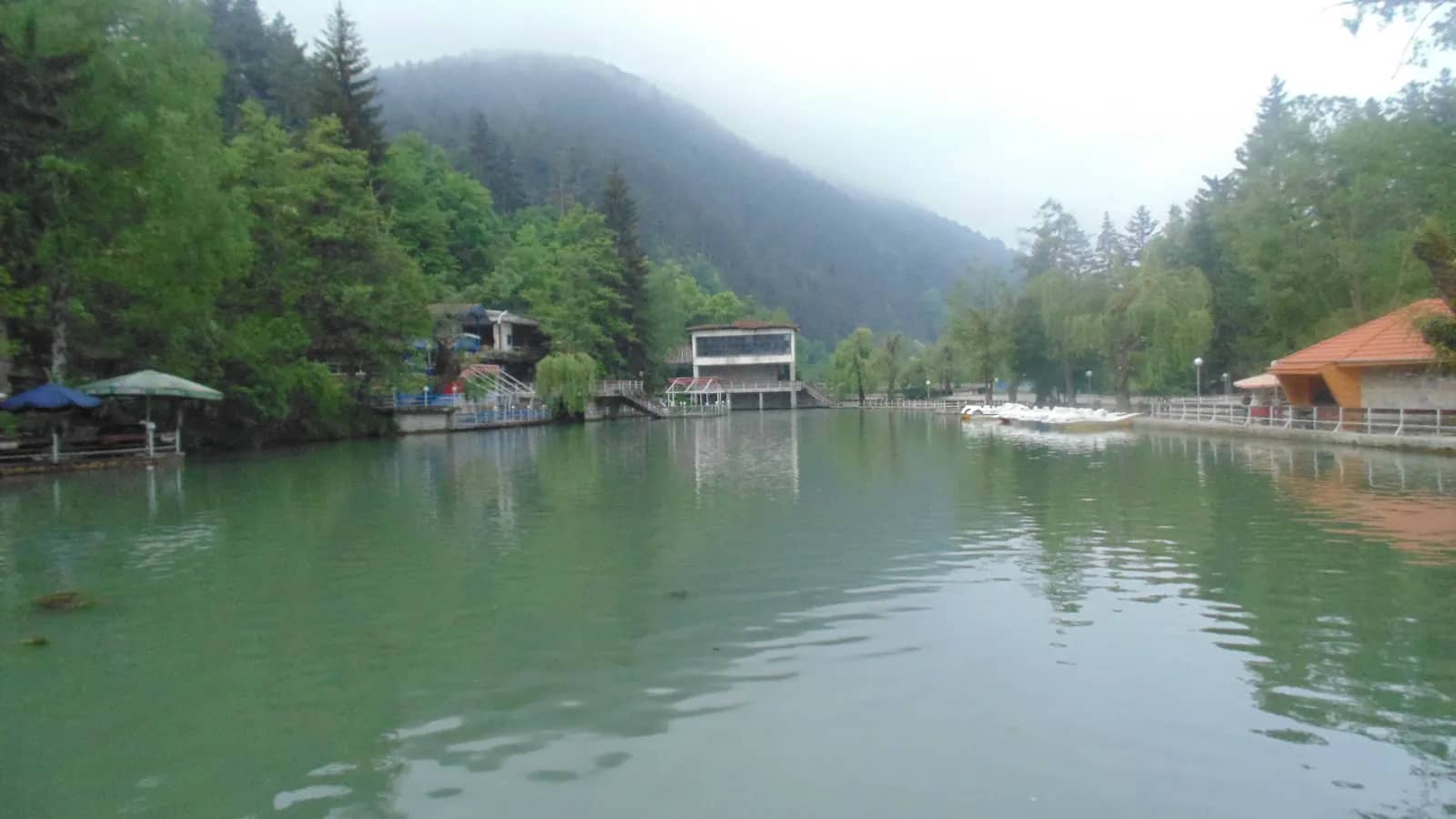
Lake Kleptuza in Velingrad, green water between forested hills in mist

Bulgaria hot springs

water that comes up warm

9 spring towns, from a geyser to a volcano

Photograph: Izvora · CC BY-SA 4.0

Bulgaria sits on a great deal of warm water. It is often said to have more mineral springs than any other country in Europe except Iceland, and people have bathed in it since the Thracians and the Romans. The towns below are the ones we would send a friend to, from a geyser at 103°C to a spring on an extinct volcano.

( before you soak )

Three things to know

  • How hot

    From about 28°C to 103°C. Some springs are for a long soak, others only for a short one. Ask at the baths.

  • Strong water

    Some of it is high in fluoride and sulphur. It is meant for bathing, and in places not for drinking every day.

  • Your health

    If you are pregnant, or have a heart or blood-pressure condition, ask your own doctor first. This page is not medical advice.

( the temperatures )

How hot is it?

where we have a figure

  • Velingrad28–91°C
  • Sandanski42–81°C
  • Hisarya41–52°C
  • Rupite71–78°C
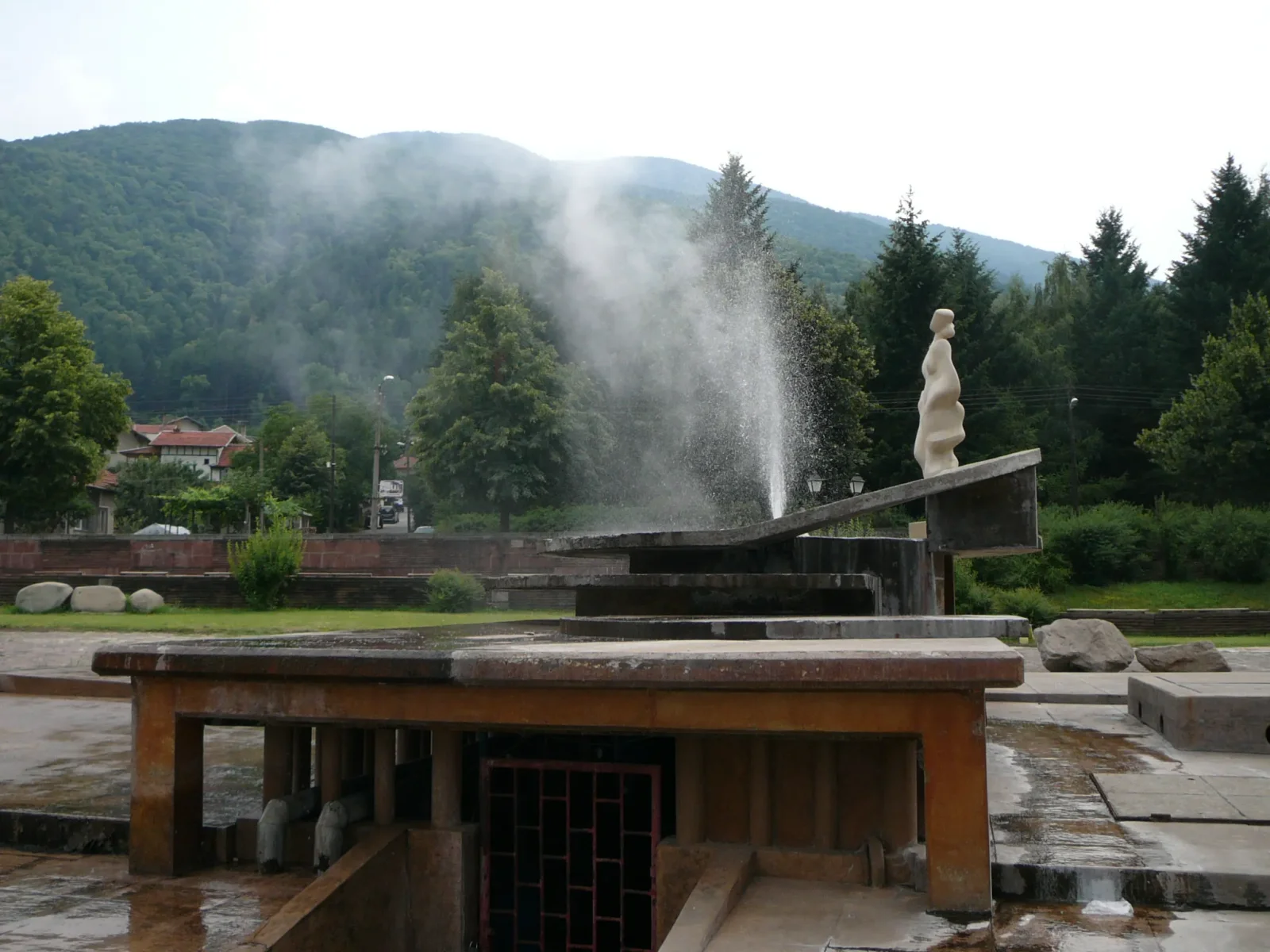
  • Sapareva Banya103°Cthe geyser

Ranges are the figures given by tourism sources; they differ a little between sources, and between one spring and the next in a town.

( the spring towns )

Where the water comes up

six to read about here

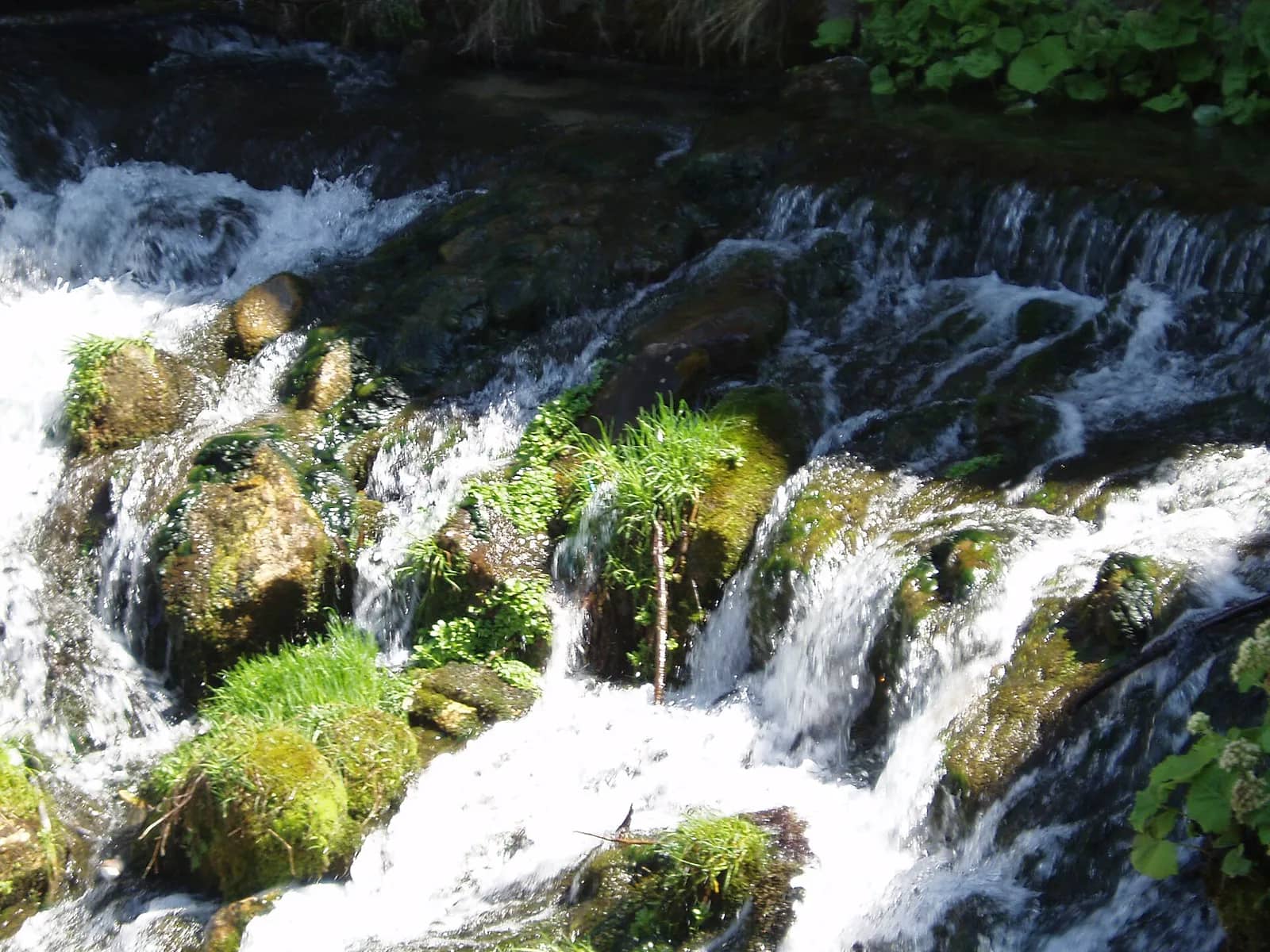
Water tumbling over mossy stone at the Kleptuza spring, Velingrad
Water tumbling over mossy stone at the Kleptuza spring, Velingrad. Photograph: Krasimir Kosev · CC BY 3.0

Western Rhodopes

Velingrad

The spa capital of the Balkans

  • More than 80 mineral springs
  • About 28°C to 91°C, depending on the spring (sources differ)
  • 22 indoor and outdoor mineral pools for the public

Velingrad is three old villages that were joined into one town in 1948: Chepino, Ladzhene and Kamenitsa. Each has its own water. Ladzhene has the Velova Banya group of springs and the men’s and women’s baths; Kamenitsa has the hottest water; Chepino has the park.

The park is Kleptuza, the biggest karst spring in Bulgaria, which gives about 1,200 litres of ice-cold water a second. It feeds two lakes, and pine forest runs south from it. So the town offers both things at once: very hot water in the pools, and very cold water in the lakes.

Some of the water here is strong. The springs at Ladzhene and Kamenitsa are high in fluoride, and the water at Kamenitsa is for bathing only, not for drinking.

go for

  • The widest choice of pools and spa houses in the country
  • A walk in Kleptuza park between soaks
  • The narrow-gauge railway: the only one of its kind in Bulgaria, to Septemvri and on to Bansko

where

At the western end of the Chepino Valley, in the Rhodope foothills.

Sources: Velingrad, Wikipedia ↗ · Visit Bulgaria: Velingrad ↗ · Lost in Plovdiv: Kleptuza ↗
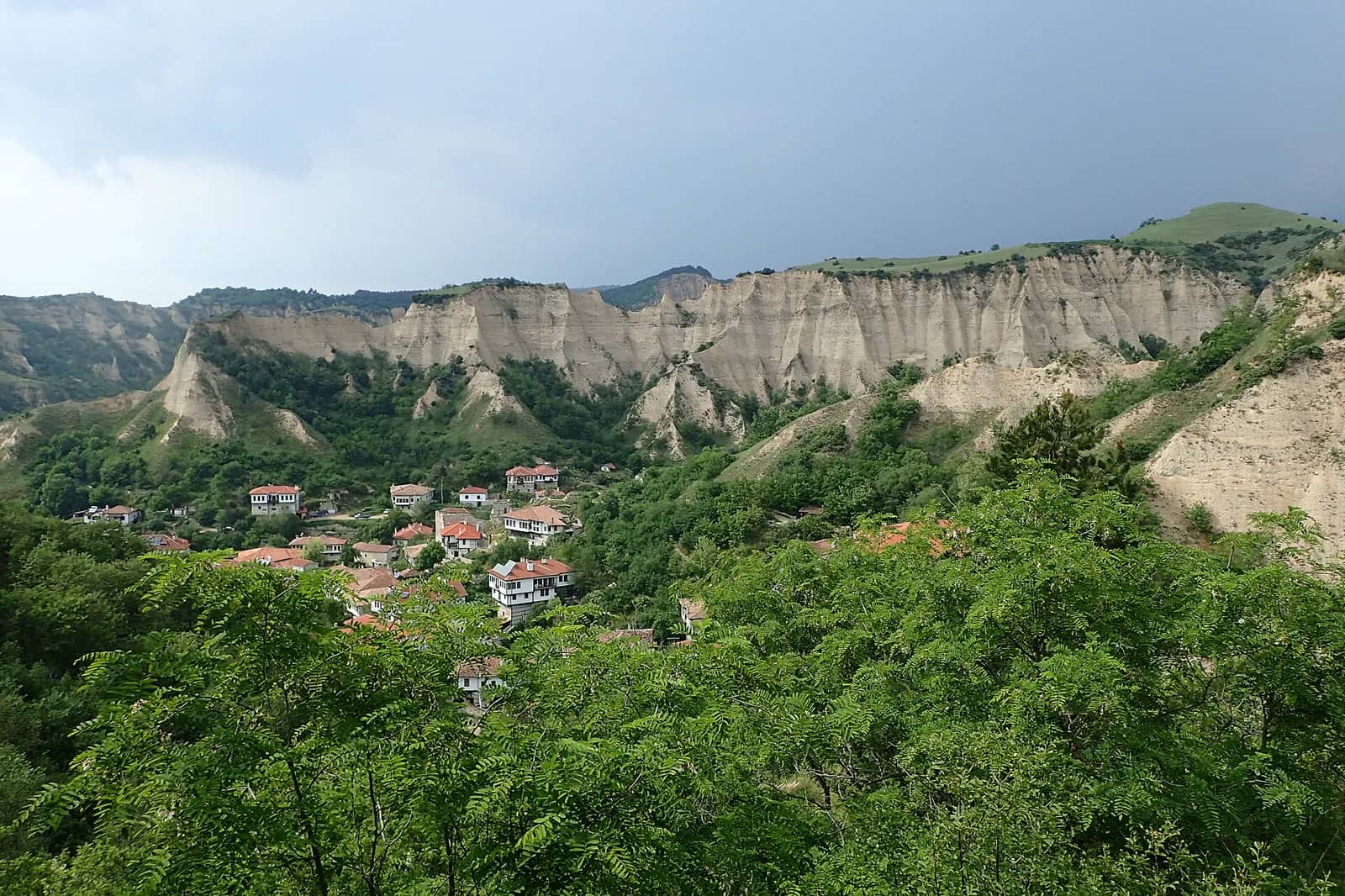
The sand pyramids of Melnik, a short drive from Sandanski, above a village
The sand pyramids of Melnik, a short drive from Sandanski, above a village. Photograph: Krzysztof Ziarnek, Kenraiz · CC BY-SA 4.0

Pirin and the Struma valley

Sandanski

The warmest town in Bulgaria, once called Saint Doctor

  • Thermal springs of about 42°C to 81°C (sources give different counts, from 20 to about 80)
  • Low in salt and rich in minerals

Sandanski sits low, between 240 and 300 metres, at the foot of the Pirin mountains, and it has the highest average temperature in the country, with about 2,700 hours of sun a year. Until 1947 the town was called Sveti Vrach, Saint Doctor.

It is built in an amphitheatre on the flank of Pirin, with a long park, St Vrach, running through it. Winters are mild, which is why people come for the water when the rest of the country is cold.

It is also a good base. Melnik, the smallest town in Bulgaria, and Rozhen Monastery are a short drive away; Rupite is about 12 kilometres off; and the Pirin National Park has a visitor centre here.

go for

  • Mild winters and a long season
  • Soaking in the morning, walking in Pirin in the afternoon
  • Wine country at Melnik, close by

where

In the Sandanski–Petrich valley, about 160 km south of Sofia on the road to Greece.

Sources: Sandanski, Wikipedia ↗ · Visit Bulgaria: Sandanski ↗
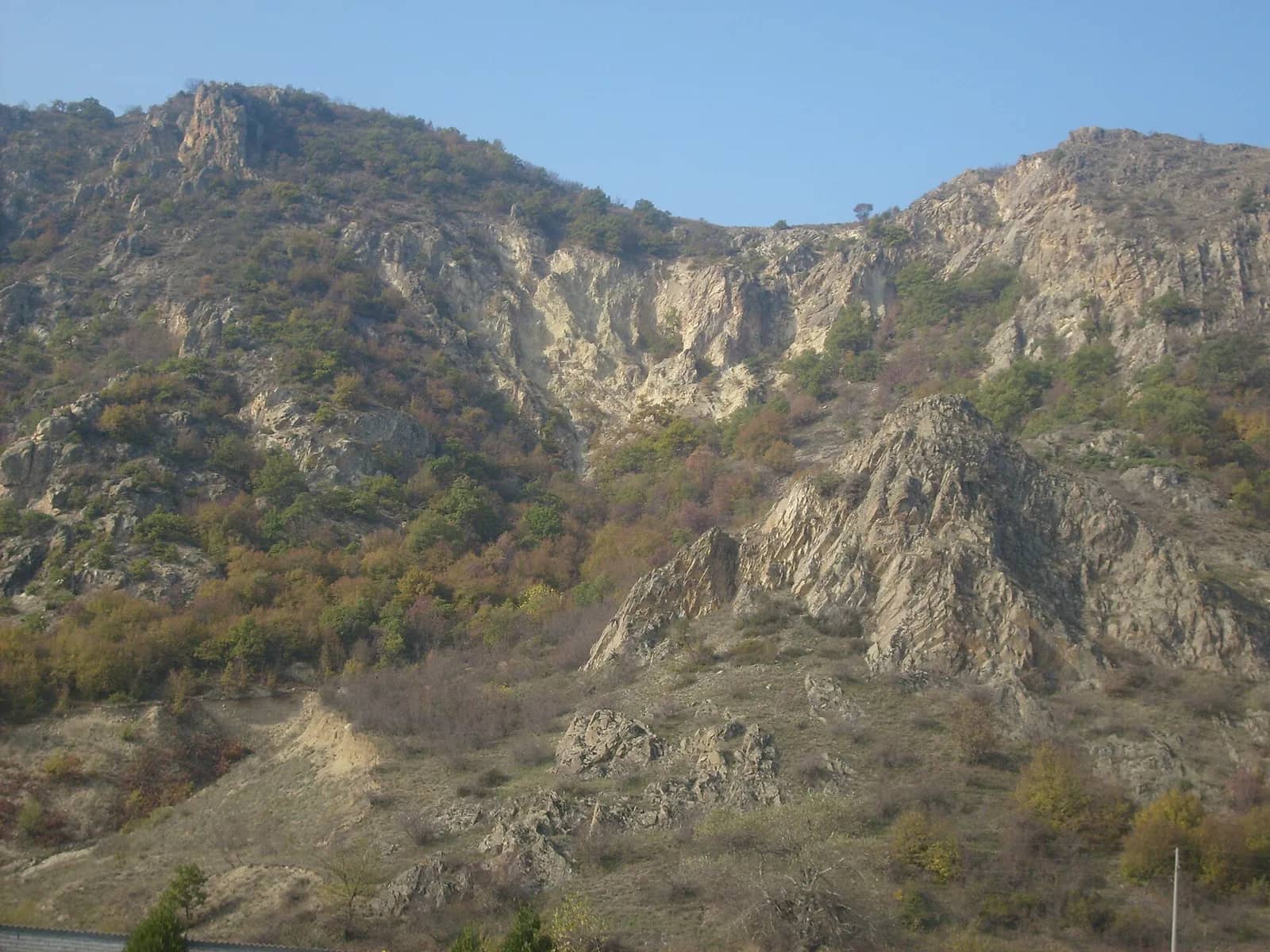
Volcanic rock and trees on the hills around Rupite
Volcanic rock and trees on the hills around Rupite. Photograph: Todor Bozhinov · CC BY-SA 3.0

The Struma valley, below Pirin

Rupite

A warm spring on an extinct volcano

  • 71°C to 78°C
  • About 35 litres a second

Rupite is a village and a small protected area on the flank of Kozhuh, the remains of a volcano that is only 281 metres high but stands clear out of the flat plain. The springs here are among the hottest in this guide.

It is better known as the place where Baba Vanga lived, and many people come for her sake and for the church of St Petka that she sponsored. It has its own page, because it is more than a spring.

go for

  • A short, quiet stop with a very hot spring
  • The church and the hill, if you are on a pilgrimage of your own

where

About 10 km north-east of Petrich, on the west bank of the Struma.

Sources: Rupite, Wikipedia ↗

Osogovo, the far west

Kyustendil

A place of healing since before Rome

  • More than 40 mineral springs
  • Water rich in sulphur compounds
  • A national spa resort at about 600 metres

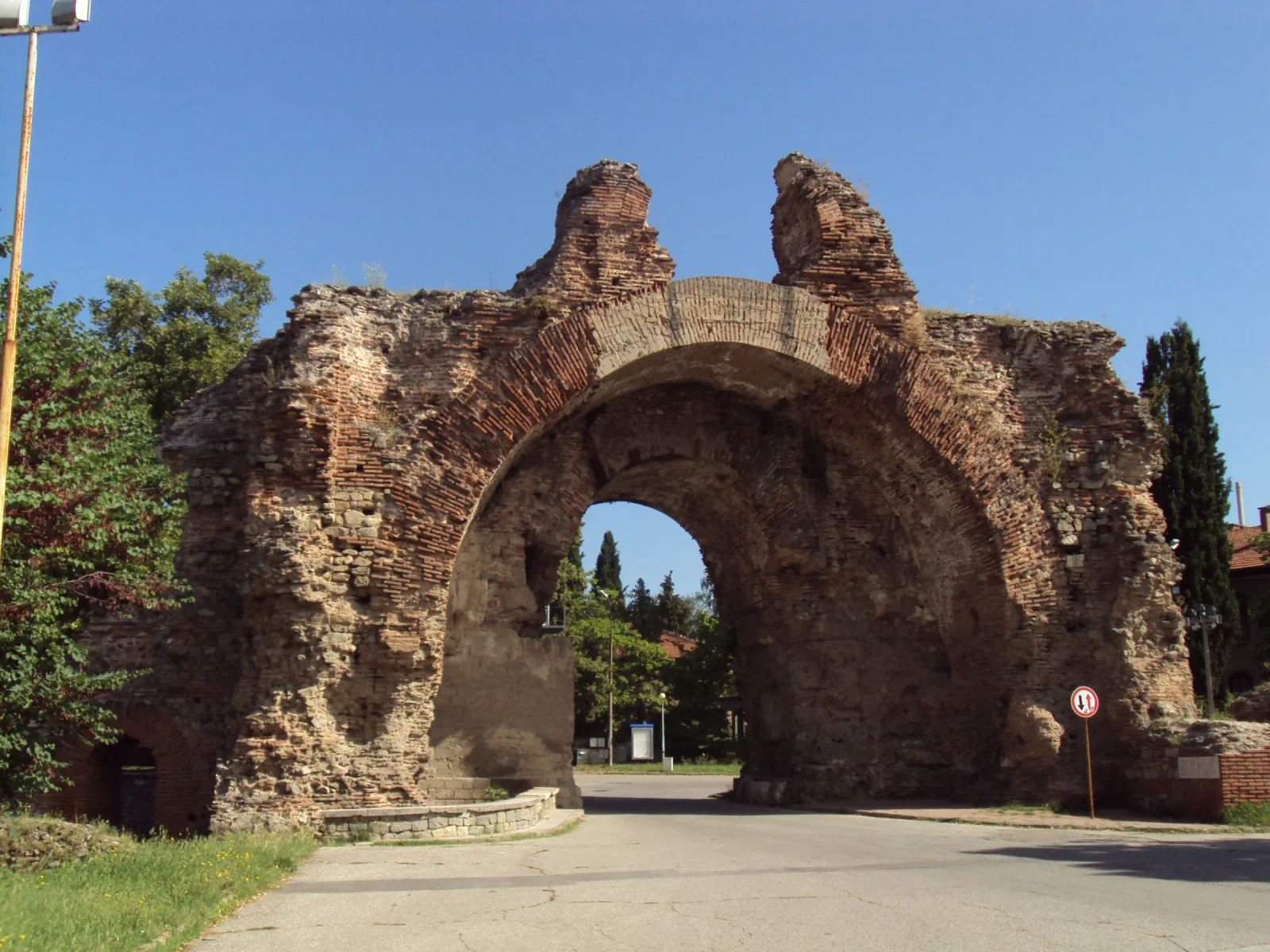
People have come to Kyustendil to be healed for a very long time. In the fifth and fourth centuries BC there was a Thracian settlement here known for its asclepion, a shrine to Asclepius, the god of medicine. Under Rome it became Pautalia, the third largest city of its province.

The Roman walls, over twenty-nine hectares of them, were built mainly of granite blocks, and parts of a second, smaller fortress, Hisarlaka, still stand among pines above the town. Thermal baths, basilicas and floor mosaics have been uncovered.

The name itself carries the water in it: Kyustendil comes from the Turkish for a shire or a bath.

go for

  • Roman walls and a spa town in one afternoon
  • A quiet corner with few visitors
  • Day walks on the Osogovo mountain

where

Near the borders with North Macedonia and Serbia, about 90 km south-west of Sofia.

Sources: Kyustendil, Wikipedia ↗

The valley of Varshets under the Balkan Mountains
The valley of Varshets under the Balkan Mountains. Photograph: Vassia Atanassova, Spiritia · Public domain

The Balkan Mountains, north-west

Varshets

The old-fashioned spa town of the north

  • Mineral springs, with two spa centres in town

Varshets is one of the oldest resorts in northern Bulgaria, in the small valley of the Botunya river, 359 metres up on the northern slopes of the Balkan Mountains. The first state baths opened in 1910; the Sun Garden was laid out in 1934; and in 1950 it was declared a national resort.

It has the feel of a place that was designed for resting: a long garden, a mineral spa building from 1919, and a small museum. A bronze of a Thracian boy from the 2nd century BC, found nearby, is the town’s symbol.

go for

  • A gentle, old spa town without the crowds
  • Pairing a soak with the rocks of Belogradchik and the caves of the north-west

where

In Montana Province, in the same north-western corner of the country as Belogradchik.

Sources: Varshets, Wikipedia ↗

At the edge of Sofia

Bankya

Hot springs at the edge of the capital

  • Mineral springs, used for treatment for hundreds of years

Bankya is part of Greater Sofia but feels like a village at the foot of Lyulin mountain, 630 to 750 metres up. Thracians lived here over 2,500 years ago, and Roman walls and sewers have been found nearby. The name comes from the Bulgarian for a hot spring.

The mineral baths, built between 1907 and 1910 to a design by the Munich architect Carl Hocheder, are the heart of the town, with a park around them. “Vazov’s Oak” is the tree the poet Ivan Vazov liked to rest under.

go for

  • A single night of warm water before or after a flight
  • A day out from Sofia

where

About 17 km west of the centre of Sofia.

Sources: Bankya, Wikipedia ↗

( already on HAWA )

Springs with a page of their own

a geyser, Roman walls, a spa house

( putting it together )

Three ways to string the springs

by where they are

( good to know )

Questions about Bulgaria’s hot springs

Which spring town should I start with?

For the most choice of pools and spa houses, Velingrad. For a geyser and the start of the Rila walks, Sapareva Banya. For Roman walls and a quiet soak, Hisarya or Kyustendil. For mild winters, Sandanski.

When is the best time to go?

Winter is when the springs are at their best: the water steams in the cold. Spring and autumn are mild and quiet. Summer is hot in the lowlands, so choose the mountain towns, such as Velingrad or Sapareva Banya.

Do I need a car?

It helps. Bankya is a short ride from Sofia, and Velingrad has a narrow-gauge railway to Septemvri, but for Sandanski, Rupite and the north-west a hired car is the simplest way.

Is the water safe to drink?

Not all of it. Some springs are for drinking, and some, at Kamenitsa for example, are high in fluoride and meant for bathing only. Follow the signs at each spring.

Do I book through HAWA?

No. You contact and book each place directly. HAWA takes no commission and does not take payment.

Sources: Bulgaria is second in Europe, after Iceland, in mineral springs (BNT) ↗ · Spa towns in Bulgaria, Wikipedia ↗ · Visit Bulgaria: balneology, spa and wellness ↗

Facts are from public sources and are not medical advice. Check opening times, prices and any rules with each bath before you go. Photographs are openly licensed from Wikimedia Commons and credited under each one.

( need a hand? )

Not sure where to begin in Bulgaria?

Take the four-minute reflection, or ask a real person to help you choose.

← all of Bulgaria